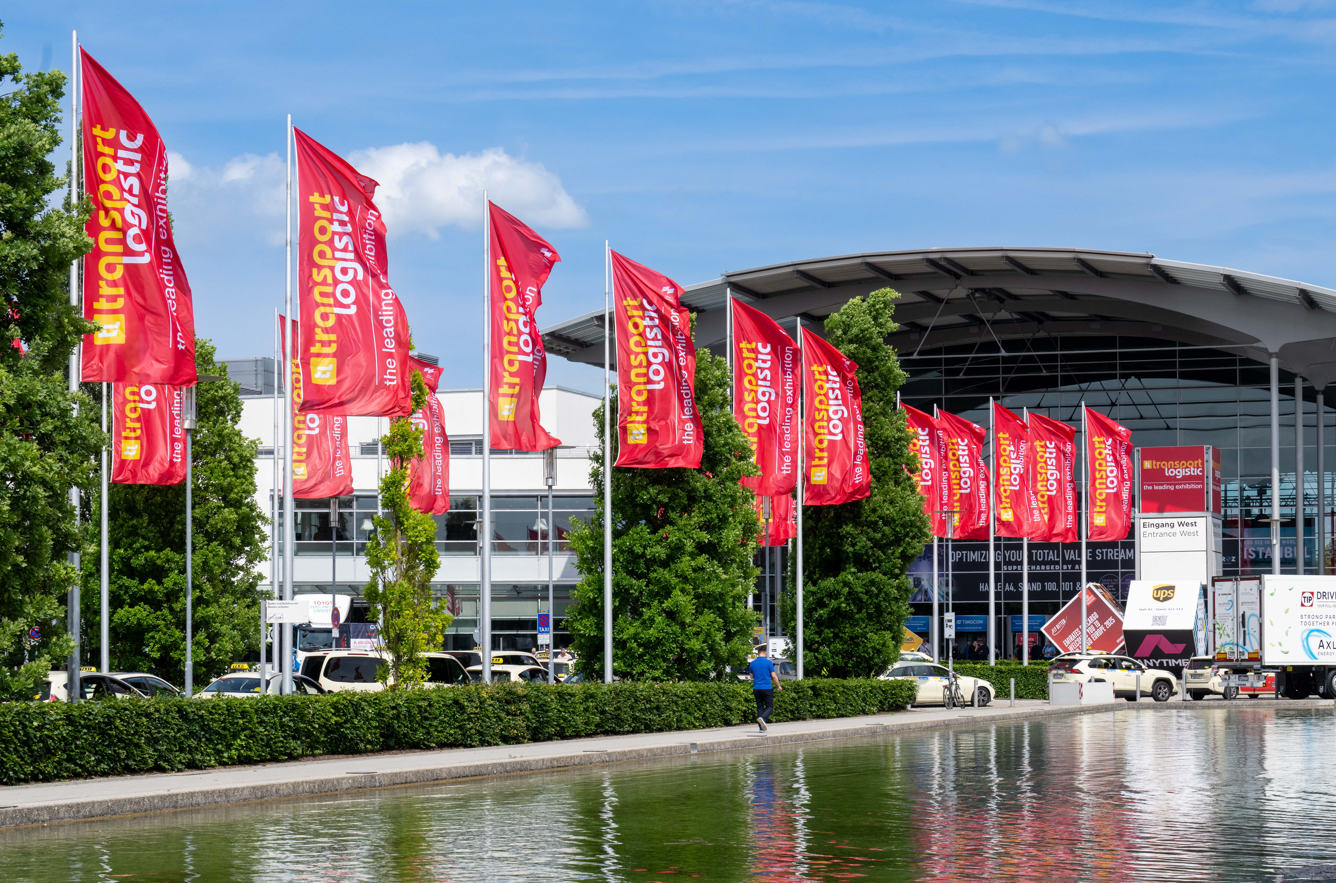
Widely regarded as a cornerstone event in the global logistics calendar, the Transport and Logistic Fair once again brought together the industry’s leading minds, technologies, and innovations in Munich. With more than 2,700 exhibitors and 77,000 visitors from over 130 countries, this year’s event was far more than just an exhibition — it was a powerful reflection of how deeply technology, transportation, and innovation are now embedded in the logistics sector.
ACI was there on the ground — meeting with partners, exploring cutting-edge solutions, and sharing insights. Here’s our perspective on this year’s fair: what mattered, what’s changing, and where we see logistics heading next.
A Broader Definition of Logistics
One of the key takeaways from the Transport and Logistic Fair was how the definition of logistics continues to expand. It’s no longer just about moving goods — it’s about intelligent systems that adapt, optimise, and deliver with greater speed, sustainability, and accuracy.
From AI-driven route planning to robotic warehouse automation, the event showcased how innovation is transforming logistics. And yet, despite the pace of change, the human element remains at the heart of it all. At ACI, we believe that technology should empower people — not replace them — and this philosophy was echoed throughout the fair.
Contract logistics, in particular, stood out as the foundation of modern supply chains. Third-party logistics (3PL) providers are increasingly delivering fully integrated solutions — from warehousing to distribution — tailored to the unique needs of their clients. Automation plays a critical role in enabling these services to scale efficiently and meet growing demands, but it’s the strategic, human-led approach that drives success.
“In today’s fast-paced logistics landscape, companies that fail to adopt automation are at risk of falling behind. At Transport Logistic 2025, it became evident that those who embrace technology are gaining a significant edge.”
What once gave companies a competitive advantage has now become a necessity. Automation — whether in AI-assisted planning or robotic fulfilment — reduces errors, increases speed, and streamlines operations. Those who hesitate risk being left behind in an increasingly demanding marketplace.
A Global Event with Local Relevance
Though held in Munich — the capital of Bavaria — the Transport and Logistic Fair reflected the truly global nature of the logistics industry. While many leading European companies were present, the breadth of international participation this year was remarkable.
From Western Europe’s major road freight operators to port authorities representing Europe’s extensive coastline, the presence was strong. But the clearest expression of globalisation came in the AirCargoEurope section, where international airlines, cargo handlers, and airports — both large and small — gathered from across the world.
Germany continues to be a highly attractive market, not only for its opportunities but as a gateway to broader international logistics. Establishing a presence here builds trust, increases visibility, and creates a platform for expansion into other regions. Exhibitors from Europe, Asia, and North America all showcased solutions tailored for the German market — yet clearly relevant far beyond its borders.
For ACI, the fair was a strong reminder: today’s logistics challenges are global. Solutions must be scalable, interoperable, and able to operate seamlessly across systems and borders.
What People Were Really Talking About
Beyond the eye-catching stands and product demos, the real energy of the Transport and Logistic Fair was in the conversations. Across panels and forums, critical issues were explored — from labour shortages and decarbonisation efforts to how AI and automation are redefining last-mile delivery and supply chain transparency.
What stood out was the shift from theory to action. This year’s conversations were not about what might be possible someday — they focused on what is working now. That emphasis on practical results made this edition of the fair feel more grounded, more urgent, and more impactful than ever before.
More Than Just Business
What made the event truly memorable was the human connection. Alongside formal sessions were countless networking opportunities — from awards evenings to informal gatherings celebrating local culture. The Transport and Logistic Fair reminded us that despite all the technology, it’s still people who drive the industry forward.
Technology matters. But so do relationships, collaboration, and shared vision. These are just as vital as the platforms we build and the systems we deploy.
ACI’s Role in the Conversation
At ACI, we’re committed to making logistics smarter — without adding complexity. Our vision technology enables logistics teams to perform real-time quality checks on the flow, delivering results in under two seconds without disrupting operations.
Everything we saw at the Transport and Logistic Fair reaffirmed that our approach is aligned with the industry’s direction: seamless, non-intrusive, and built to keep up with the pace of logistics today.
Final Thoughts
The Transport and Logistic Fair was more than just a touchpoint for the industry. It was a clear view into a sector evolving with intent, urgency, and purpose. For ACI, it confirmed that our focus on people-first innovation and performance-enhancing automation is not only relevant — it’s essential.
We left Munich inspired, informed, and more connected than ever to the global logistics community.
Let’s keep the conversation going. If you’d like to discover how ACI’s solutions can support your logistics operations, we’re ready when you are.